
Male Rhinoplasty in NYC
Refresh Your Features. Rediscover Yourself.
The surgical techniques employed for male rhinoplasty are essentially the same as those for women. However, most men will want an outcome that is ‘more masculine’ from their procedures. In your consultation, you and Dr. M. Zakir Sabry will discuss your goals: A more masculine look? Correction of a bump or bulbous tip? Correction of a functional problem or ‘ethnic’ feature? Dr. Sabry has expertise in all methods of rhinoplasty (open and closed), from very straightforward corrections to the complexities of correcting prior rhinoplasty (revision or secondary rhinoplasty).
Quick Links
What Is Male Non-Surgical Rhinoplasty?
Very often the ‘ideal nose’ can be achieved with temporary dermal fillers. Non-surgical rhinoplasty can give excellent results immediately. Small irregularities or asymmetry in shape or contour of the nose can be improved with judicious placement of fillers. The procedure is fast, painless, and requires no downtime or recovery. During your consultation, Dr. Sabry will let you know if you are a candidate for a non-surgical option.

Why Choose Murray Hill Plastic Surgery for Male Rhinoplasty?
At Murray Hill Plastic Surgery, our philosophy is rooted in patient-first care and a conservative, thoughtful approach that prioritizes your safety, comfort, and long-term satisfaction.
Dr. Zakir Sabry brings more than nine years of intensive surgical training to your care, having completed full general surgery training, a plastic surgery residency, and a craniofacial surgery fellowship. He also serves as an Assistant Professor at New York Medical College and has performed more than 1,000 aesthetic procedures.
We don’t upsell, over-operate, or push procedures that don’t serve your needs. Instead, we take the time to understand what you’re experiencing physically and emotionally (and whether surgery is even the right next step). We often say, “less is more,” because our focus is on natural, functional improvement rather than drastic change.
You’ll meet with Dr. Sabry directly from the start, spend real time discussing your goals, and receive a tailored surgical plan that reflects your anatomy, your priorities, and what will genuinely bring you the best outcome. Our team is small, attentive, and easy to reach, and our follow-up care is more personal than what many larger NYC practices offer.
We see you, we hear you, and we treat you like we would treat a family member: with honesty, empathy, and respect.
Who Is a Candidate for Male Rhinoplasty?
Male rhinoplasty may be appropriate for men who want to refine the size, shape, structure, or function of the nose while preserving a naturally masculine appearance. The best candidates are in good overall health, have realistic expectations, and want a thoughtful change rather than an overdone result. During your consultation, Dr. Sabry will listen closely to what you want to improve and evaluate your facial anatomy, nasal structure, skin thickness, and breathing function. The goal is to create a plan that fits your features, respects your identity, and helps the nose look more balanced without appearing surgically altered.
Open vs. Closed Rhinoplasty: What's the Difference?
Open and closed rhinoplasty are two surgical approaches used to reshape the nose. With open rhinoplasty, a small incision is made along the columella, the strip of tissue between the nostrils. This approach allows Dr. Sabry to lift the nasal skin and see the underlying cartilage and bone more directly. It can be especially useful for more detailed reshaping, tip refinement, significant asymmetry, or revision rhinoplasty.
Closed rhinoplasty is performed through incisions hidden inside the nostrils. This approach avoids an external incision and may be appropriate for select patients who need more limited changes to the bridge, contour, or overall shape of the nose. The best technique depends on your anatomy and the complexity of your goals. Dr. Sabry has experience with both open and closed rhinoplasty and will recommend the approach that allows for the safest, most precise result.
What Happens the Day of Rhinoplasty Surgery?
When you arrive for rhinoplasty surgery, the team will review your surgical plan, answer any final questions, and help you feel comfortable before surgery begins. Dr. Sabry will confirm the details of your rhinoplasty plan and make sure the goals discussed during your consultation are clearly understood.
The procedure is typically performed under anesthesia, and the surgical steps depend on whether you are having open rhinoplasty, closed rhinoplasty, functional correction, cosmetic reshaping, or revision rhinoplasty. Dr. Sabry may adjust cartilage, refine the nasal tip, smooth a dorsal hump, improve symmetry, or address structural concerns that affect breathing. After surgery, you will spend time in recovery while the team monitors you closely. You will need a responsible adult to take you home and stay with you during the early recovery period.
What Does a Male Rhinoplasty Recovery Timeline Look Like?
Male rhinoplasty recovery happens in stages, and it is normal for the nose to look and feel different throughout the healing process. Swelling, congestion, bruising, and pressure are expected early on, especially around the nose and eyes. Most patients should plan for social downtime while the most visible signs of surgery improve.
Male rhinoplasty patients can look forward to recovery milestones through the first year after surgery:
- First few days: Rest is the priority. Swelling, bruising, congestion, and mild discomfort are common, and you will need to keep your head elevated.
- First week: A splint may remain in place, and many patients avoid work, exercise, and social plans during this period.
- 1 to 2 weeks: Bruising usually improves, and many patients feel more comfortable returning to routine daily activities.
- Several weeks: Swelling continues to decrease, but strenuous exercise should only resume when Dr. Sabry says it is safe.
- Several months: The nasal shape becomes more refined as deeper swelling settles.
- One year: Final rhinoplasty results are typically easier to appreciate as the nose fully heals.
Dr. Sabry will give you specific recovery instructions based on your procedure and monitor your progress during follow-up visits.
What Do Male Rhinoplasty Results Look Like?
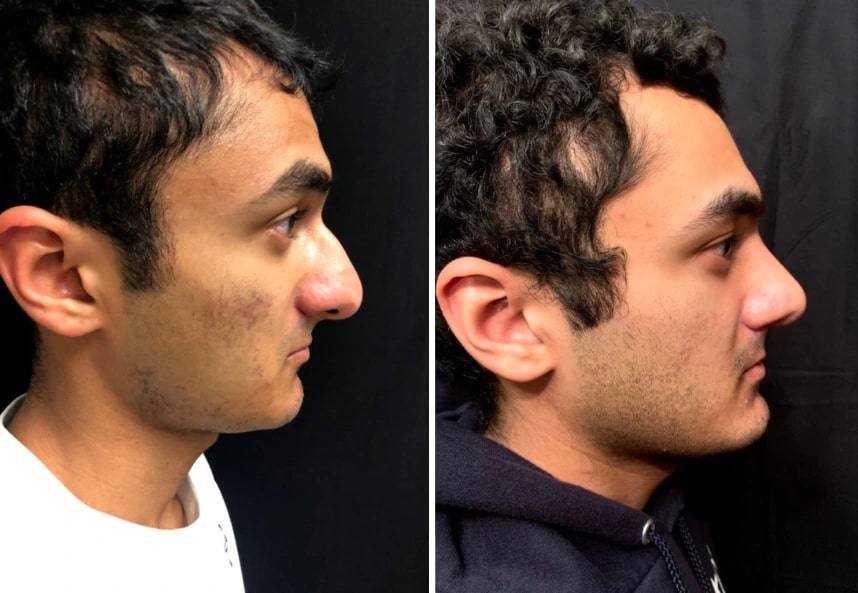
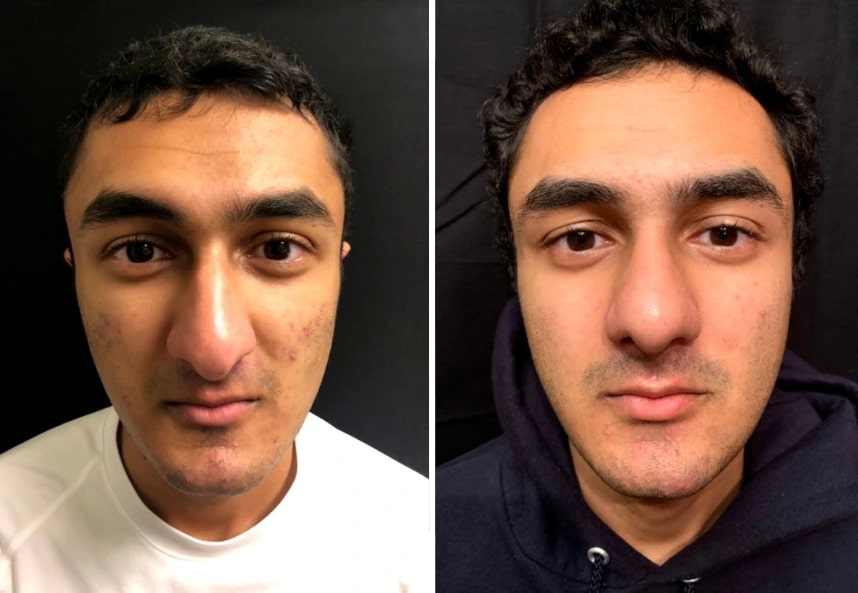
Male rhinoplasty results should look balanced, natural, and in proportion with the rest of the face. For many men, the goal is not to create a smaller or overly refined nose, but to improve the features that distract from overall facial harmony.
Dr. Sabry takes a conservative and thoughtful approach to male rhinoplasty because masculine nasal aesthetics often depend on strength, structure, and proportion. A strong bridge, defined tip, and balanced profile may be important parts of the final plan, depending on your features and goals. Results continue to improve as swelling fades, and the final outcome should feel like a more refined version of your natural appearance rather than a nose that looks operated on.
Schedule Your Murray Hill Male Rhinoplasty Surgery
When you’re ready, we’re here to walk this journey with you. To get started, simply contact us online or call (212) 737-1308 to schedule your consultation with Dr. Sabry and our team today. We are located in Murray Hill, Manhattan, and proudly serve patients visiting from NYC, New York State, and throughout the nation.
Male Rhinoplasty FAQs
Can male rhinoplasty improve both appearance and breathing?
Yes, male rhinoplasty can often improve both nasal appearance and breathing when cosmetic and structural concerns are present simultaneously. Some patients want to correct a dorsal hump, crooked bridge, or bulbous tip while also addressing nasal obstruction, a deviated septum, or changes caused by injury. Dr. Sabry evaluates both form and function during consultation because the nose needs to look balanced and work properly. In some cases, cosmetic rhinoplasty may be combined with functional nasal surgery to support better airflow. This approach can be especially helpful for men who want a more refined nose without sacrificing strength or breathing quality.
What nasal concerns can male rhinoplasty correct?
Male rhinoplasty can address several cosmetic and functional concerns involving the nose. Patients often consider surgery to smooth a bump on the bridge, refine a bulbous nasal tip, straighten a crooked nose, narrow the nostrils, reduce asymmetry, or improve facial balance. Rhinoplasty may also help men who have nasal changes from trauma or a previous surgery. Dr. Sabry customizes each male rhinoplasty plan based on anatomy, skin thickness, cartilage strength, and the patient’s desired outcome. The goal is not to create an artificial or overly altered nose, but to improve the features that make the nose feel distracting or out of proportion.
How is male rhinoplasty different from female rhinoplasty?
The surgical techniques used in male rhinoplasty and female rhinoplasty may be similar, but the aesthetic goals are often different. Male rhinoplasty usually focuses on preserving strength, structure, and natural masculine proportion. Over-narrowing the bridge, lifting the tip too much, or creating a too-delicate profile can make the result look less balanced on a male face. Dr. Sabry takes facial anatomy, brow position, jawline strength, chin projection, and nasal structure into account when planning surgery. This helps create a result that refines the nose while still looking natural and masculine.
Is open or closed rhinoplasty better for male nose surgery?
Neither open nor closed rhinoplasty is inherently better for male rhinoplasty. The right approach depends on the changes needed, the complexity of the nasal structure, and whether the procedure is primary or revision rhinoplasty. Open rhinoplasty may be preferred when Dr. Sabry needs more direct visibility for tip refinement, asymmetry correction, or more complex reshaping. Closed rhinoplasty may be appropriate for select patients who need more limited changes and want all incisions placed inside the nostrils. During the consultation, Dr. Sabry explains which technique will provide him with the best access and control while achieving a natural-looking male rhinoplasty result.
How long does swelling last after male rhinoplasty?
Swelling after male rhinoplasty improves gradually and can take longer than many patients expect. The most visible swelling and bruising usually improves during the first few weeks, but deeper swelling can last for several months. Tip swelling often takes the longest to refine, especially in patients with thicker nasal skin. Final rhinoplasty results may take up to a year to fully settle, even though patients typically look presentable much sooner. Following recovery instructions, avoiding early overexertion, and attending follow-up visits can help keep the healing process on track as the nose continues to become more defined.
When can I return to work after male rhinoplasty?
Many patients plan to take about 1 to 2 weeks away from work after male rhinoplasty, depending on their job and comfort level. If your work is mostly desk-based, you may feel ready to return once the splint is removed and bruising has improved. Jobs that involve heavy lifting, physical activity, or a higher risk of facial injury may require more time away. Dr. Sabry will give you personalized guidance based on the extent of surgery and how your early healing progresses. Even after returning to work, swelling can remain, so it is important to avoid strenuous activity until you are cleared.
Can male rhinoplasty fix a nose injury from sports or trauma?
Male rhinoplasty can often improve changes caused by sports injuries, accidents, or previous nasal trauma. A broken or injured nose may heal with a crooked bridge, visible bump, asymmetry, or breathing problems. In some cases, surgery may focus on restoring straighter structure and better airflow while also improving appearance. Traumatic nasal concerns can be more complex than purely cosmetic changes, so careful planning is important.
How long do male rhinoplasty results last?
Male rhinoplasty results are intended to be long-lasting because the surgery reshapes the underlying nasal bone and cartilage. Once the nose has healed fully, the structural changes made during surgery should remain stable for many years. However, the nose can still change gradually with aging, skin quality, trauma, or certain medical factors. Dr. Sabry plans male rhinoplasty with long-term balance in mind, using a conservative approach that supports natural facial proportions rather than chasing trends. Maintaining realistic expectations is important because final results take time to settle. For most patients, rhinoplasty creates a lasting improvement in nasal shape and facial harmony.